
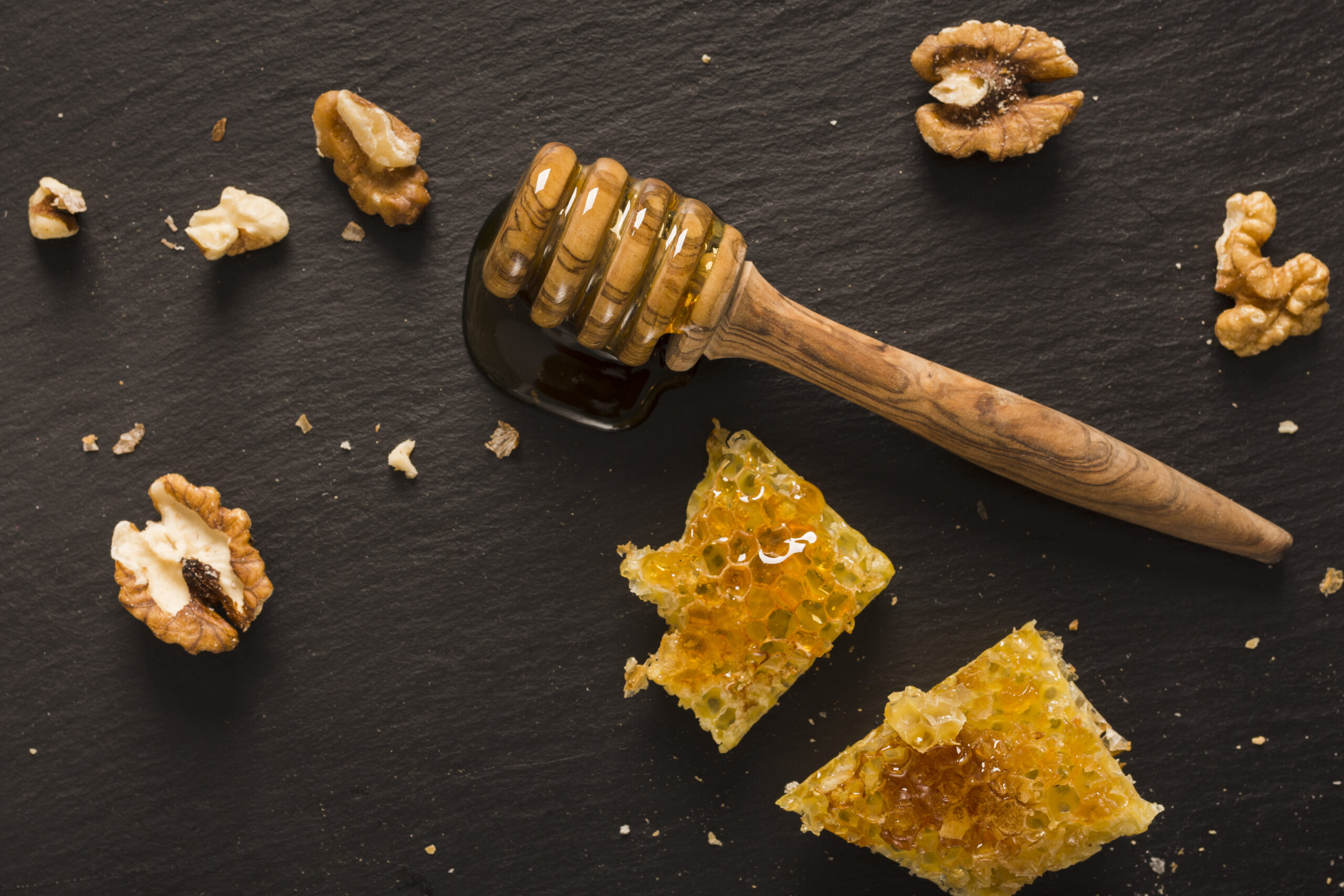
What if a spoonful of mad honeycould be both intoxicating and a medication?
Mad Honey: A sweet and dangerous natural extract is a rare and fascinating product that bees produce on the rugged mountains where rhododendrons grow. This golden nectar, which has been valued for ages as a natural cure and aphrodisiac, has both therapeutic potential and a hidden danger (like: nausea, dizziness, vomiting, hallucination, blurred vision, etc.).
Mad honey’s hallucinogenic features can transform a simple taste into a mind-altering experience, yet in modest quantities, it has been used to reduce pain and enhance wellbeing. Might appear like ordinary honey – thick, golden, and sweet, but one teaspoon can reavel more.
Let’s explore more about mad honey, its history, cultural significance and uses in this blog.
What is Mad Honey and its components?
Mad honey, also referred to as red honey in Nepal or deli bal in Turkey, is an exceptional kind of honey extracted from bees that gather nectar from specific Rhododendron flower species. In contrast to regular honey, it has special medicinal and intoxicating qualities due to the presence of natural substances called grayanotoxins.
Diterpenes, which are polyhydroxylated cyclic hydrocarbons without nitrogens, are known as grayanotoxins. Honeybees produce intoxicating grayanotoxins from the nectar and pollen of plants in the Rhododendron genus (Ericaceae family), primarily from R.luteum, R.flavum, R.simsii, and R.ponticum.
Mad honey is also reffered to as bitter honey because of its harsh, bitterflavorand tendency to cause irritation in the throat. Compared to mad honey in other seasons, honey containing grayanotoxin is even more toxic in the spring. Its use as a biological weapon and its export to Europe for similar purposes are examples of its historical use in traditional medicine and for recreation.
The majority of reports of mad honey intoxication are documented from Turkey, although cases have also been reported from China, the Philippines, Korea, Indonesia, Japan, Nepal, Austria, Germany, Brazil, and certain North American countries.
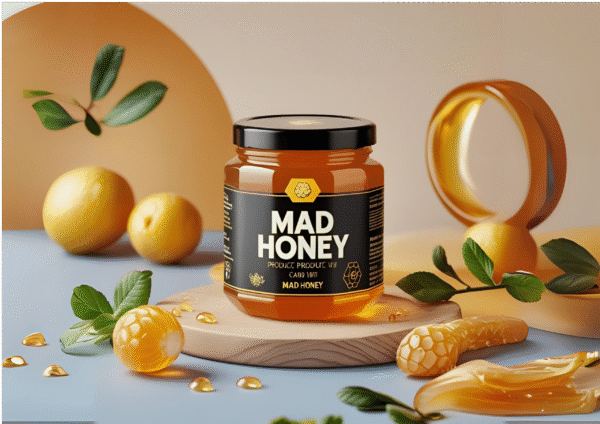
Himalayan Delight Nectar Mad Honey
Luas dan nyaman. meski belum berani kemana-mana karena kondisi pandemi. hanya menilmati kamar dan sarapan. pelayanannya ramah.
Mad Honey’s Natural Components
Antioxidants, enzymes, and vital elements found in mad honey have positive health effects. Mad honey’s primary natural components are
- Grayanotoxins: Natural neurotoxins called grayanotoxins are present in the nectar of some rhododendron species, which bees use to produce mad honey. They are a primary substance that gives mad honey its psychotropic properties.
- Enzymes: Bees add naturally occurring proteins (such as glucose oxidase, invertase, and diastase) when producing honey. Other bioactive substances in honey are preserved and activated by enzymes.
- Flavonoids: Flavonoids are an excellent antioxidant. Pollen and nectar include antioxidants produced from plants. Like other raw honeys but with more strength, premium mad honey may promote overall wellness because of these flavonoids.
- Natural Sugars: Natural sugars are mostly fructose and glucose, with traces of other carbs like sucrose. They serve to preserve the honey’s stability and shelf life by acting as a natural preservative.
Best Time to Harvest Mad Honey
The best time to harvest honey is in the spring (April–May) and autumn (October–November), when rhododendrons are in bloom and bees are most active. The higher content of grayanotoxin in the spring harvest results in stronger hallucinogenic honey. Honey from the autumn harvest is more widely used for therapeutic purposes since it is safer and more medicinal. Traditional honey hunters, such as the Gurung in Nepal, schedule their journeys in accordance with these seasonal bee movement patterns and flowering peaks.
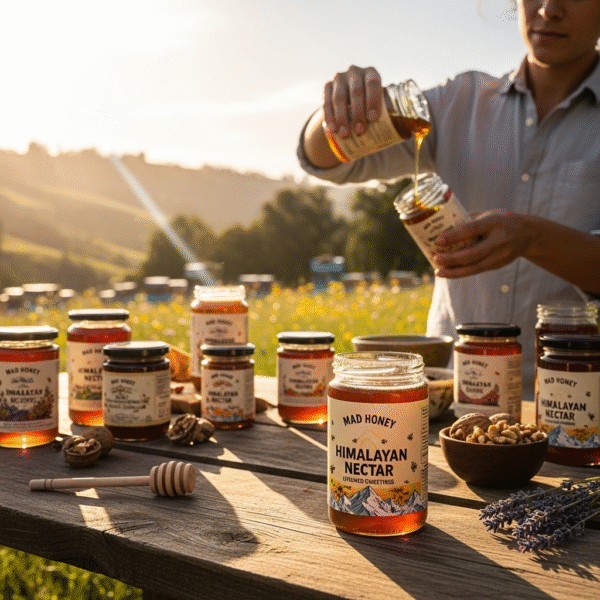
Himalayan Delight Nectar Premium Mad Honey
Luas dan nyaman. meski belum berani kemana-mana karena kondisi pandemi. hanya menilmati kamar dan sarapan. pelayanannya ramah.
History of Mad Honey
History of mad honey ingestion dates back thousands of years, and it is associated with ancient trade, medicine, and even warfare. This peculiar honey date back as early as 400 BCE.
Nepal’s Story of Mad Honey
Mad honey has been collected in Nepal for years, especially by the Gurung and other native groups who live in the Annapurna and Manaslu areas. These people have created specific methods for harvesting honey from the hives of Apis laboriosa, the largest honeybee in the world, which builds its nests on high cliffs between 2,500 and 3,000 meters above sea level.
Mad honey has significance in traditional medicinal procedures, in addition to its use in historical conflicts. It was valued as a natural remedy and aphrodisiac in places like Nepal, Turkey, and portions of the Caucasus, where it was thought to increase energy, promote circulation, and ease pain. It has been rigorously collected from high mountain hives by local beekeepers for decades, passing on their expertise for future generations.
Mad Honey and The Story of Turkey
401 BCE: According to the Greek historian Xenophon, his troops consumed local honey while fleeing through Turkey, which caused them to get unwell and disoriented.
Xenophon was leading a Greek army that year that was returning to Greece from a successful battle against the Persians along the Black Sea coast.
In northeastern Turkey, close to Trabzon, the soldiers chose to eat honey that had been stolen from adjacent beehives. They ingested large amounts of it without realizing it was mad honey that contained grayanotoxin. Although they recovered subsequently, this occurrence is regarded as the first ever recorded instance of mad honey intoxication.
Roman and Mad Honey
67 BCE: Mad honey is a biological weapon that was employed against Roman soldiers in 67 BCE by King Mithridates VI of Pontus. The ancient history of the Mad Honey is connected to a well-known Roman tale. Along the Black Sea, King Mithridates of Pontus and his Persian army were pursued by Gnaeus Pompeius Magnus, often known as Pompey the Great, and his Roman army.
The Persians planted honey pots with local bee nectar in strategic locations for the Roman troops to find. When the Roman troops found the honey pots, they began eating the honey, thinking it was ordinary raw honey. However, it was actually Mad Honey, which required careful dosing. The Romans were unable to fight successfully because they became disoriented and weak after eating the honey.
More than 1,000 Roman soldiers were killed as the Persian army returned and seriously harmed the Roman forces while suffering only minor losses on their own side.
Where to Find Mad Honey Worldwide?
Mad honey is mainly harvested in Nepal and Turkey, particularly in the Black Sea region, although it can also be found in a few other places where Rhododendron species that contain grayanotoxins are found.
Other places where mad honey naturally occurs are listed below:
- The region of the Caucasus
Countries: Georgia, Azerbaijan, and portions of Russia, especially the Caucasus Mountains and Black Sea region. - The Himalayan Areas (Outside of Nepal)
Countries: Bhutan and India, particularly in Sikkim, Arunachal Pradesh, and portions of Uttarakhand. - A part of China
Areas: Tibet, Sichuan, and Yunnan. - Japan
Cultural Significance of Mad Honey
Mad honey is deeply symbolic in the areas where it is produced, especially in areas of Turkey, Nepal, and the Caucasus Mountains. Beyond its medicinal and hallucinogenic qualities, it symbolizes a bond between people, nature, and traditional practices.
Here is the cultural significance of mad honey in various regions:
Cultural Significance of Mad Honey in Nepal
Harvesting mad honey is both a spiritual activity and a source of income in Nepal. Using ancient methods that have been passed down through the generations, the Gurung and Kaski communities risk their lives by climbing high cliffs to gather honey from wild bee colonies.
The courageous tradition of harvesting mad honey in Nepal reflects a profound appreciation for nature and its gifts that begins with prayers and offerings to the forest gods. The community people believe these rituals provide honey hunters success and safety. Additionally, mad honey is valued not only as a natural remedy but also as a representation of cultural identity and bravery.
Himalayan Delight Nectar Premium Mad Honey
Luas dan nyaman. meski belum berani kemana-mana karena kondisi pandemi. hanya menilmati kamar dan sarapan. pelayanannya ramah.
Cultural Significance of Mad Honey in Turkey
Mad honey, or deli bal (locally known in Turkey), has been used as traditional medicine for a long time in the Black Sea region of Turkey, particularly in Trabzon and Rize. Small doses of it are frequently used to treat conditions like high blood pressure, stomach pain, and weakness.
Mad honey has a traditional significance in Turkey as a powerful natural tonic. Mad honey is useful as traditional healing rituals. Shamans and indigenous healers in Turkey use mad honey in their rituals, as they think it purifies their body and soul.
It is frequently used in purification rites, particularly those connected to spiritual transformations and awakenings. Traditionally, medicinal mixtures are prepared to treat a variety of illnesses by combining mad honey with herbs and other natural elements like holy basil, turmeric, ginger, black cumin, etc.
NOTE: Combinations of mad honey with other herbs have a long history in traditional medicine and are often used cautiously. Considering mad honey’s strong grayanotoxin concentration, the right dosage is essential; even slight changes might make a medicinal mixture dangerous.
Cultural Significance of Mad Honey in the Caucasus (Georgia, Azerbaijan, Russia)
In the Caucasus, mad honey has been utilized for ages in folk medicine. Men have traditionally consumed it before performing physical labor or intimate relations since it is seen as a sign of strength and endurance. Mad honey has been handed down through the generations in rural areas as a high-end natural cure that is frequently given as gifts or sold.
Cultural Significance of Mad Honey in the Himalayan Areas – Outside of Nepal (Bhutan & India)
Many ethnic groups use honey in gifts, healing, and protective traditions, giving it significant ritual and therapeutic value. However, traditions place a greater value on general or stingless bee honey, and there is not much evidence that “mad honey”—hallucinogenic honey obtained from rhododendron—is consumed or recognized separately in Himalayan areas outside of Nepal (Bhutan & India). Honey has great cultural and spiritual significance outside of Nepal in Bhutan and India, but the particular psychoactive “mad honey” tradition that is important to Gurung culture in Nepal is less common or less documented there.
Cultural Significance of Mad Honey in Parts of China
In regions of southern China, particularly in Yunnan, Tibet, and Sichuan, wild honey made from Apis laboriosa, the Himalayan giant honeybee, occasionally contains grayanotoxin-containing Rhododendron nectar, producing “mad honey.” Mad honey is utilized in traditional medicine and sometimes in ritual or spiritual healing by Tibetan and ethnic minority communities in the Chinese Himalayan regions. However, it is not used as a recreational or hallucinogenic substance. In certain mountain communities, harvesting this type of honey is still a tradition, appreciated more for its medical properties and scarcity than for its intoxicating properties.
Cultural Significance of Mad Honey in Japan
Although there are several rhododendron species in Japan that contain grayanotoxins, they do not seem to have been the subject of historical events or traditions related to mad honey. Mad honey does not appear to have a particular cultural importance in Japan, according to the historical record.
What are the Benefits and Uses of Mad Honey?
Mad honey has been prized for generations for its many traditional therapeutic applications, in addition to its scarcity. A large portion of its reputation derives from cultural traditions and ancient medicinal methods, even if modern science has started to investigate the effects of mad honey. Mad honey, being a folk medicine, is thought to have a number of potential health benefits when honey intake is in very small, regulated amounts.
Here are the benefits and uses of mad honey:
- Natural Pain Relief: Mad honey acts as a natural pain reliever and has the ability to relieve mild pain.
- Hypertension Treatment: Consuming mad honey in small amounts is a natural and ancient way to decrease blood pressure in some regions of Nepal and Turkey.
- Aphrodisiac Elements: For many years, mad honey has been valued as a natural aphrodisiac, as it produces a slight euphoric experience.
- Digestive Wellbeing: Mad honeyhas a probiotic component that facilitates food digestion, lessens bloating, stops diarrhea, and relieves indigestion.
- Antioxidant and Antibacterial Functions: Mad honey, unlike other types of honey, has natural antibacterial and antioxidant properties that help strengthen immunity and improve wound healing.
- Enhances Your Mood: Known by another name, “Mad honey psychedelic,” it can instantly lift your mood. Grayanotoxin promotes relaxation and improves decision-making.
- Reduces and Maintains Weight: The liver uses honey as fuel to produce glucose, which keeps the brain’s blood sugar levels high by compelling the brain to produce molecules that burn fat.
Taking a tablespoon of honey before bed helps in the process of losing weight.
Is mad honey good for the health?
In controlled doses, mad honey is traditionally believed to be an alternative medicine. It helps you boost energy and stamina, support blood circulation, help with digestive issues, and help with relaxation. It should not be consumed in large amounts because of its potential toxicity.
Effects of Mad Honey Intoxication
Mad honey should be used moderately for health reasons, but too much of it can result in mad honey poisoning, which can induce nausea, vomiting, dizziness, and, in severe cases, heart problems.
The consumption of grayanotoxin by honeybees from the leaves and flowers (nectars and pollens) of Rhododendron plant species results in mad honey intoxication. Mild to severe symptoms usually start to show up 30 minutes to a few hours after consumption, although they are rarely fatal; most cases resolve with supportive care in 24 to 48 hours.
Some of the frequent effects of mad honey intoxication are:
- Cardiovascular: Bradycardia (slow heart rate), Hypotension, dizziness, chest discomfort
- Gastrointestinal: Vomiting, Diarrhea, Indigestion
- Neurological: Diplopia, headache, numbness, excessive sweating
Here are some possible life-threatening side effects in more severe cases or with greater doses:
- Severe cardiac rhythm abnormalities, including atrial fibrillation, complete atrioventricular block, or even asystole (absence of heartbeat)
- Seizures or convulsions
- Muscle paralysis
- Hallucinations, delirium, or altered mental status
- Acute myocardial infarction (heart attack)
What does mad honey poisoning feel like?
Mad honey poisoning can feel uncomfortable and sometimes dangerous. You might have symptoms like nausea, vomiting, excessive sweating, blurred vision, low blood pressure, and a slow or irregular heartbeat.
Treatment for Mad Honey Intoxication
When left untreated, the symptoms of mad honey poisoning might last for a day. It may take a few days for an individual to fully recover and be free of all vital signs, as getting back to normal mental status is gradual. Mad honey intoxication is mainly treated symptomatically, with supportive treatment and careful observation being key components.
IV fluids are used to treat mild hypotension and dizziness, while atropine is used to treat severe hypotension and bradycardia. A stable individual may not always require hospitalization, and the majority of cases improve with supportive treatment. Occasionally, a temporary cardiac pacemaker could be required if the primary treatments are ineffective.
How to recover from mad honey poisoning?
The majority of the mild cases go away naturally within 24 hours. Take it easy, rest, drink plenty of water, consume light foods (easy to digest), and do not consume further honey or alcohol to recover.
Seek medical attention right away if your symptoms are severe, such as low blood pressure, extreme dizziness, or a slow heartbeat.
Conclusion
With a deep historical and cultural background, mad honey is a fascinating representation of nature’s duality – depending on how it is used, it can be both poison and medicine. From ancient histories of warriors using it as a weapon to the traditional medicinal methods in places like Nepal and Turkey, this wild honey still attracts researchers, travelers, and health-conscious people.
Although it has a place in alternative medicine and cultural rituals due to its psychoactive and medicinal qualities, excessive consumption carries hazards that shouldn’t be overlooked. To safely enjoy its benefits, one must understand its composition, effects, and appropriate dosage.
Mad honey ultimately serves as a reminder of the delicate balance that exists between the gifts of nature and their proper use. The unique Himalayan ecology can be preserved while mad honey continues to benefit local communities and consumers worldwide with appropriate conservation initiatives and sustainable harvesting practices. Mad honey reflects a balance that turns a powerful natural poison into a beloved cultural remedy.